
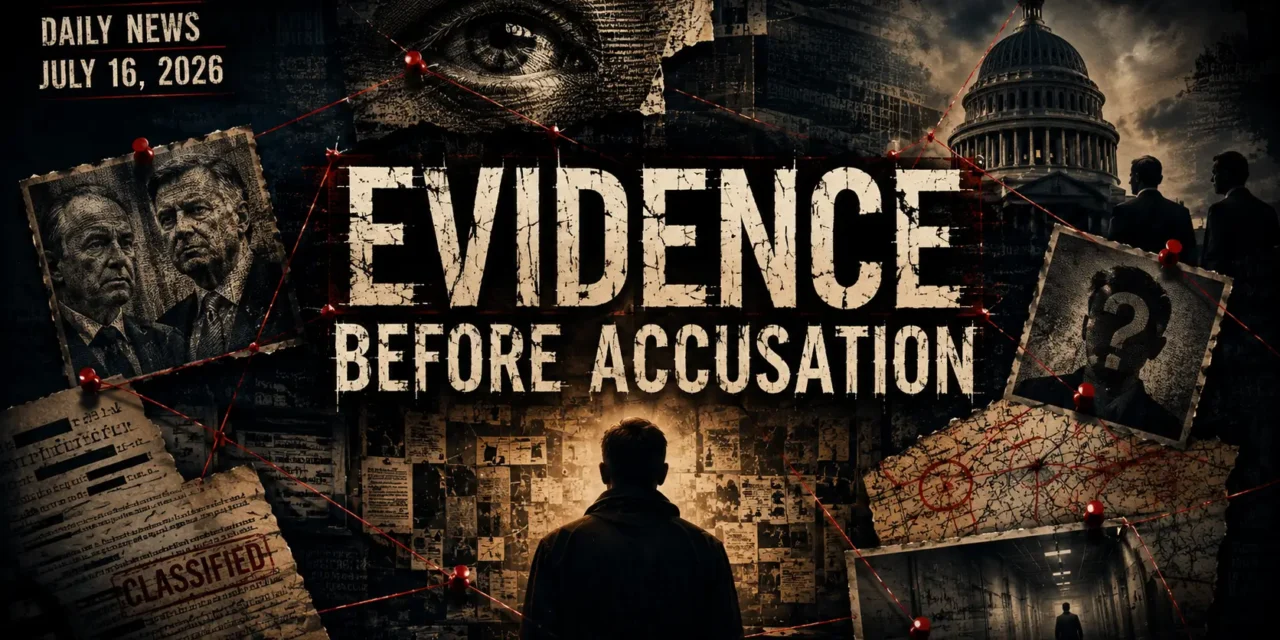
There’s a difference between asking hard questions and deciding you already know the answer.
That difference matters—especially when public officials, government institutions, and powerful organizations have given people legitimate reasons not to trust them.
Secrecy happens. Cover-ups happen. Conspiracies happen.
Scripture itself shows that secrecy, coordinated wrongdoing, and false testimony are real.
So the answer isn’t to stop asking questions.
The answer is to become more careful about the conclusions we attach to those questions.
Over the past several days, the sudden death of Senator Lindsey Graham and the hospitalization of Senator Mitch McConnell have produced a wave of speculation online.
Preliminary findings from the medical examiner indicate that Graham died from an aortic dissection connected to hardening of the arteries. Final toxicology and microscopic testing are still pending, but authorities have released no evidence suggesting assassination or foreign involvement. The FBI assisted local authorities, but that fact by itself does not indicate foul play.
McConnell, meanwhile, had been out of public view after a fall in June that briefly left him unconscious. His office later said he developed pneumonia and entered rehabilitation. Because officials released so little information for nearly a month, rumors began circulating that he had died—or that a photograph released to show him recovering was old, manipulated, or created with artificial intelligence.
A digital-forensics expert who examined the photograph said he found no evidence that it was fake or AI-generated. Senator Ron Johnson, who had publicly questioned the photograph, later admitted that his comments were based on rumor and told people to disregard them.
Now, none of that means public officials handled everything perfectly.
McConnell’s lengthy absence and the limited information released by his office created a reasonable transparency concern. When someone holds public power, the public has a legitimate interest in knowing whether that person remains capable of performing the job.
But an information gap is not evidence of assassination.
Silence is not proof that a photograph is fake.
And suspicion, even understandable suspicion, is not the same thing as discernment.
That distinction is uncomfortable because suspicion can make us feel wise.
We think we’re the ones who see through everything. We’re not fooled by the official story. We have connected the dots everyone else missed.
But what if some of the dots aren’t actually connected?
Proverbs 18:13 says, “Spouting off before listening to the facts is both shameful and foolish.”
A few verses later, Proverbs 18:17 says, “The first to speak in court sounds right—until the cross-examination begins.”
Notice that Proverbs doesn’t tell us to believe every authority figure.
It doesn’t say the first official statement is always accurate.
It tells us not to reach a verdict before we have heard enough to make one responsibly.
The first account may sound convincing. Then more evidence appears. Another witness speaks. A document is released. An expert examines the claim. Sometimes the original story holds up. Sometimes it falls apart.
Biblical discernment remains willing to follow the evidence in either direction.
Suspicion works differently.
Suspicion decides first.
Then it interprets every detail as confirmation.
If officials speak quickly, they’re controlling the narrative.
If they wait, they’re hiding something.
If they release a photograph, it’s staged.
If they don’t release one, the person must be dead.
At that point, no possible evidence can challenge the conclusion because every piece of evidence has already been absorbed into the theory.
That isn’t discernment. That’s a belief system protecting itself.
I want to be careful here because I’ve seen the other side of this.
I’ve experienced situations in church where leaders kept information hidden, controlled the narrative, and made reasonable concerns sound irrational. When people in authority misuse the label “conspiracy theory,” they can silence truthful witnesses and protect themselves from accountability.
So I’m not telling you to ignore patterns, dismiss evidence, or automatically trust institutions.
Curiosity is not the enemy.
Questions are not rebellion.
Accountability is not gossip.
The issue is what we do between the question and the conclusion.
Do we investigate?
Do we listen?
Do we distinguish what we know from what we suspect?
And are we willing to change our position when the evidence changes?
James 1:19 tells believers to be quick to listen, slow to speak, and slow to become angry. That isn’t a command to become passive. It is a command to place restraint between our emotions and our words.
That restraint becomes especially important when a claim confirms something we already want to believe.
Political loyalty can make rumors feel true before we have examined them. Fear can do the same thing. So can anger, disappointment, or painful experiences with dishonest leaders.
I have to ask myself: When I share something, am I sharing it because it has been established—or because it fits the story I already believe?
Christians should understand the danger of confident accusations better than anyone.
Jesus was the victim of an actual conspiracy. Religious leaders plotted against Him. False witnesses testified. Political authorities knowingly participated in injustice.
Yet the reality of that conspiracy does not give us permission to treat every suspicious circumstance as another conspiracy.
In fact, the trial of Jesus shows us why evidence and truthful testimony matter so much. False witnesses did not merely get a detail wrong. Their words helped condemn an innocent man.
Jesus said that He is the truth. His kingdom is not advanced through rumors, selective facts, manipulated fear, or accusations we cannot support.
Following Christ means our speech must increasingly resemble His character.
That includes what we repost.
What we imply.
What we say privately.
And what we confidently announce while adding, “I’m just asking questions.”
Sometimes “I’m just asking questions” really does mean we are seeking truth.
Other times, it becomes a convenient way to spread an accusation without accepting responsibility for it.
Here is the question I believe this story places before us:
Am I searching for the truth, or am I searching for evidence that protects what I already believe?
Those are not the same search.
So here is one practical action for today.
Before sharing a serious claim about another person, pause and verify it through more than one credible source. Look for original reporting rather than screenshots, clipped videos, or someone else’s interpretation. Then separate what has been established from what remains unknown.
You may still have questions afterward.
Keep asking them.
Just hold your conclusions with the same honesty you expect from the people you are questioning.
We do not need less curiosity.
We need curiosity shaped by humility, patience, courage, and love for the truth.
Because suspicion can make us feel alert.
But discernment makes us willing to listen—even when the evidence leads somewhere we did not expect.
Pray This
Lord Jesus, You are the truth. Forgive us for the times we have allowed fear, anger, or political loyalty to speak before wisdom. Give us courage to ask honest questions, patience to examine the evidence, and humility to admit what we do not know. Protect us from falsehood, but also protect us from falsely accusing others. Make our words reflect Your character and help us pursue truth with both conviction and love. Amen.









Recent Comments