
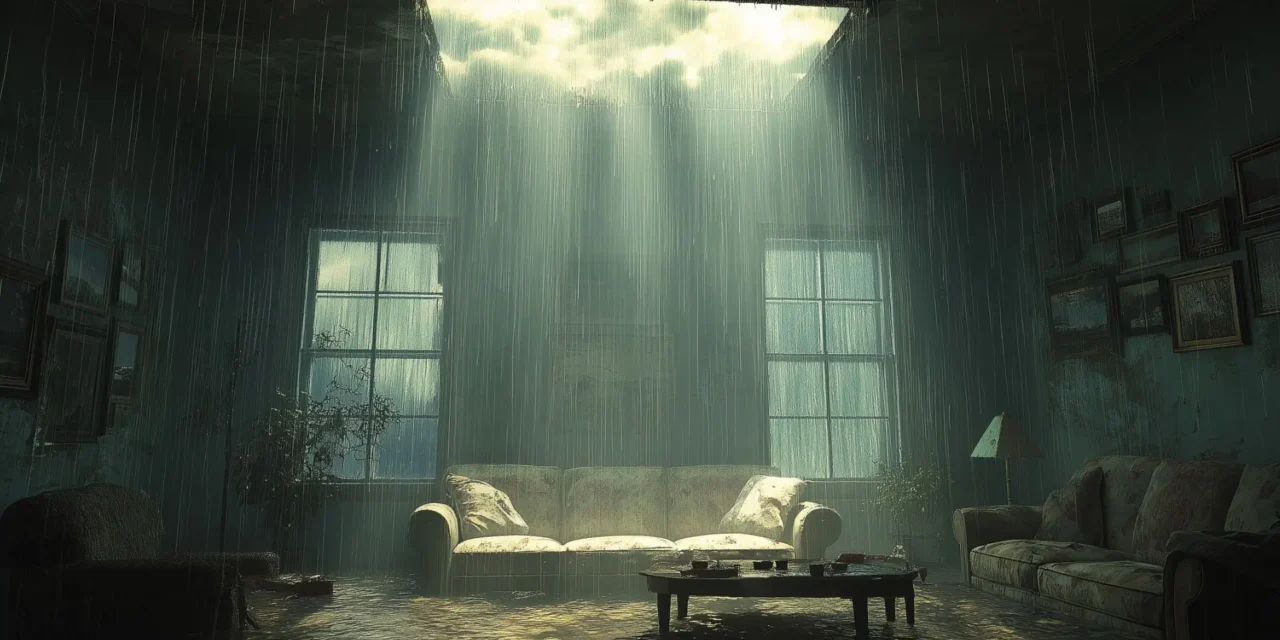
Forgiveness would be easier if God asked us to do it in the dark—where emotions can hide, where pain feels distant, where the details blur. But real forgiveness doesn’t happen in the safety of shadows. It happens with the lights on, with every wound visible, with every fear awake, with every memory refusing to stay quiet.
Forgiveness happens where it hurts.
I knew Jesus commanded forgiveness. I had preached it. Taught it. Counseled it. Believed it.
But forgiveness in theory is a far different thing than forgiveness in blood and bone. It’s easy to forgive the abstract offender. It’s easy to release a hypothetical wound. It’s easy to quote Scripture when the pain belongs to some distant person.
It’s harder when the wound has your daughter’s name on it.
After we discovered what our daughter had endured, the idea of forgiving anyone who resembled her abuser felt impossible. Forgiveness seemed like betrayal—like loosening my grip on justice, like abandoning her, like making peace with something that deserved war.
And then, almost immediately, God set His eyes on the one place inside me I didn’t want Him to touch.
David.
His sin wasn’t the same as my nephew’s. But it lived in the same neighborhood. The same category. The same darkness.
Every time I looked at him, I saw the wound in my daughter. Every time I heard his voice, I heard the silence she lived in for years. And yet Jesus didn’t hesitate.
He didn’t give me time to negotiate or gather emotional strength. His command was already written long before my pain arrived:
“Forgive, as I forgave you.”
There was no footnote exempting fathers of wounded children. No clause excusing pastors carrying trauma in their homes. No theological escape hatch. Forgiveness wasn’t a suggestion.
It wasn’t a feeling.
It was obedience.
So I tried to argue with Him—not out loud, but in the private places of my heart.
Lord, look at what my daughter went through. Lord, look at the devastation in my home. Lord, look at what these men have done. Lord, it’s not fair. Lord, he doesn’t deserve it. Lord, I can’t do this.
But no matter how much I threw at heaven, the same quiet truth stood immovable:
Forgiveness has nothing to do with what the offender deserves. It has everything to do with who Jesus is.
I realized something else, something far more confronting:
Forgiveness didn’t mean I trusted David.
It didn’t mean I excused him. It didn’t mean I released him from the legal system. It didn’t mean I restored him to leadership or relationship. It meant I placed justice where it belonged—in the hands of God, not in mine.
Forgiveness was not a warm emotional moment. It was a decision made with trembling hands. I remember the day I finally surrendered it. I wasn’t in church. I wasn’t kneeling beside a bed. I wasn’t in prayer with a worship song playing.
I was driving alone, replaying memories I didn’t ask to see—my daughter’s exhaustion, her voice cracking in the dark, her lost expressions, the email that shattered me, the look in her eyes when we told her we knew.
I gripped the steering wheel until my hands hurt, because forgiveness felt like releasing a right I wasn’t ready to release. But then the truth came like a whisper:
“If you hold on to judgment, you will carry it. If you release it, I will carry you.”
Forgiveness didn’t heal me. Not instantly. Not even slowly.
It didn’t stop the grief. It didn’t stop the waves of anger that hit without warning. It didn’t stop the heaviness of watching my daughter try to rebuild something inside herself that had been broken for years.
Forgiveness didn’t fix anything.
But it freed me.
It freed me from becoming the judge I was never built to be. It freed me from letting bitterness take root in the soil of my love for my children. It freed me from adding another weight to the burden already crushing my home. It freed me to pray with a heart that wasn’t poisoned by vengeance.
It freed me to keep ministering. It freed me to keep breathing.
Forgiveness wasn’t a door into healing. It was a door into surrender.
Forgiveness with the lights on means forgiving with full awareness:
full awareness of the wound,
full awareness of the cost,
full awareness of the injustice,
full awareness of the consequences.
And still saying:
“Lord, I put this in Your hands.”
Forgiveness didn’t make me feel holy.
It made me feel empty—emptied of the right to judge, emptied of the desire to repay, emptied of the weight I had been holding. And in that emptiness, Jesus met me. Not with triumph. Not with power.
But with the same quiet strength He showed on the cross: a forgiveness that had no conditions, no excuses, no shortcuts.
Forgiving David didn’t mean I stopped grieving for my daughter.
It meant I stopped carrying something that was too heavy for a human heart.
I forgave because Jesus asked me to.
And because obedience, even painful obedience, is the only path where healing can begin.
Forgiveness wasn’t the conclusion of my struggle.
It was the beginning of my surrender.
Faith in the Dark is Jesse Velez’s true story of enduring faith, costly obedience, and discovering God’s presence in seasons of grief and silence. Best to read the 12-Part Series in order:
- The Night the Police Lights Found Me
- The Call That Split My World
- Behind the Glass
- Life as a Pastor, Father, and Protector
- My Daughter’s Disappearing Act
- My Mother’s Drive and the Truth She Carried
- Holding My Family’s Pain in My Hands
- Loving the Guilty and the Wounded at the Same Time
- The Jesus I Wanted vs. the Jesus I Needed
- Forgiveness With the Lights On
- Faith Inside the Fire
- The Road That Goes On








Recent Comments