
The day my mother called, I knew something was wrong before she ever said a word. It wasn’t the tone of her voice—it was the fact that she was already on the road, halfway down from Kissimmee, without warning. Four hours is a long drive to make for casual conversation. You don’t drive that far unless the weight in your heart refuses to stay still.
“I need to talk to you and your wife,” she said.
That was all.
She would be there soon.
The rest of the day felt like waiting for a storm you can hear before you can see. I tried to stay busy—answer emails, prepare for small group, check on the church to-do list—but everything felt thin, like tissue paper stretched too tight.
When she arrived, she looked tired in a way that wasn’t about sleep. She didn’t say anything right away. She sat with us for a moment, letting the silence settle, then asked if we could go upstairs for privacy.
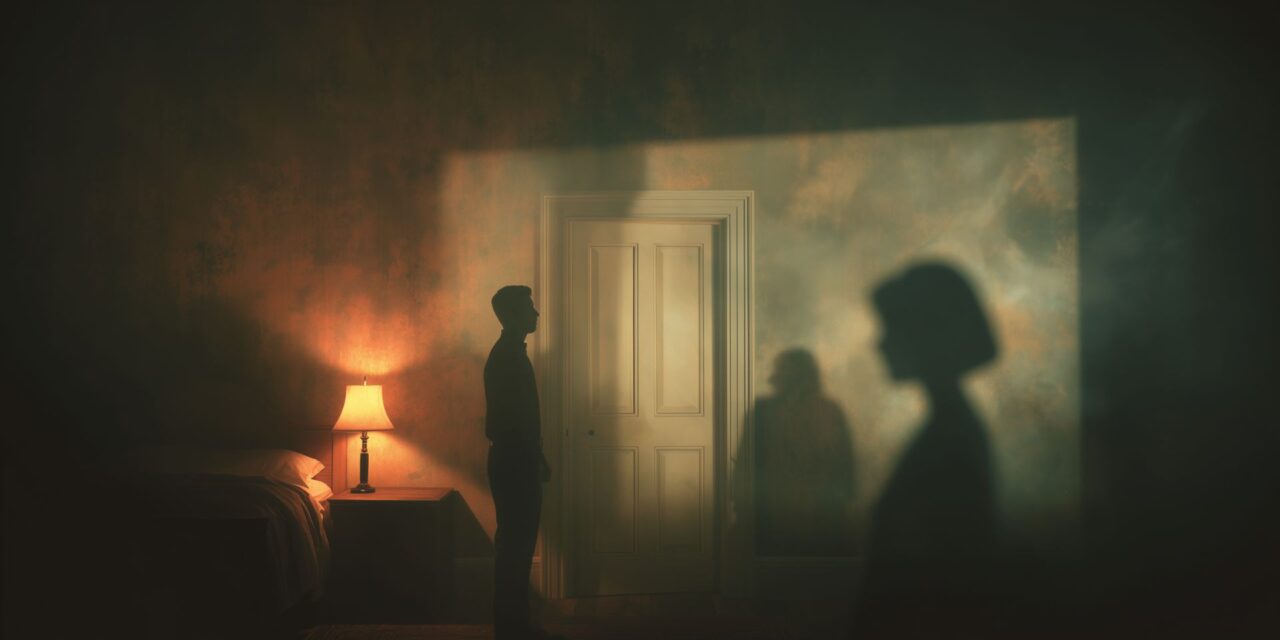
My wife and I followed her into our bedroom. She closed the door softly behind us, and the world shrank to that one room, that one moment, that one breath before the truth.
She didn’t try to cushion it. She didn’t delay. She didn’t dress it up.
“Your daughter has been abused,” she said. “For years.”
My mind couldn’t process the words fast enough. It was like language itself had been knocked out of alignment. My wife collapsed into my mother’s arms—her knees giving out faster than her tears. I didn’t cry. I didn’t speak. I didn’t move. I just stood there, stunned, as if someone had unplugged me and left only the shell.
Then she said the name.
My nephew. The boy we had practically raised on weekends. The child we brought into our home to protect from the chaos in his own. The one we fed, clothed, prayed for, treated as family—because he was family.
He had been abusing my daughter since she was nine.
Nine.
A number that doesn’t reconcile with harm. Nine is homework and cartoons and church crafts. Nine is innocence. Nine doesn’t belong anywhere near the word abuse.
My mother told us how she found out. How he confessed. How he admitted everything. She told us he had emailed me as well—an email that arrived before I had checked my inbox. When I opened it later, seeing his confession in his own words felt like watching someone take a sledgehammer to the foundations of my life.
There is no preparing for that kind of revelation.
No instinct that wakes up and says, Ah, yes, this is how we handle the unraveling of reality.
There is only shock—thick, heavy, blinding.
My wife was weeping in my mother’s arms, and I stood beside them, numb. My mind scrambled to connect the dots of the past year—the late nights, the distance, the trembling voice during the 4 AM phone call, the cold car in the parking lot, the doors she kept closing around herself.
Suddenly, it all made sense. Too much sense. The kind of sense that breaks you.
We didn’t wait long before going to find her.
She hadn’t been coming home regularly; she’d been staying at my wife’s niece’s home, hiding in safety she couldn’t name. When we arrived, she was asleep—deeply, heavily, the kind of sleep that exhaustion forces onto the body.
We woke her gently. She blinked up at us, confused, caught between rest and reality.
“We know,” we said.
Those two words pulled her fully awake. She looked lost. Small. Nineteen years old but carrying something that had been eating through her since childhood.
She didn’t cry. She didn’t explain. She didn’t protest. She just looked tired—tired in a way that no teenager should ever look.
We brought her home, and for a few hours, our house felt like a fragile piece of glass balancing on the edge of a table. One wrong word, one wrong breath, and everything would shatter. We told the other children that something serious had come to light, that we needed time, that we would explain more soon. They stood outside the storm, hearing thunder without understanding the lightning.
I remember calling my friend Alex the next morning because I needed someone who knew us—really knew us—to hear the words I couldn’t hold alone. When he met me at the park, the moment I tried to speak, I broke. Years of pastoral composure, years of fatherly strength, years of spiritual discipline—none of it could brace me for the sound of my own grief coming out of my mouth.
He held me, and I cried in a way that felt foreign to my own body.
That night, after my daughter was home, after the house was quiet, after the first shock wore off, I walked outside and looked at the sky. I wanted to pray, but I didn’t know how. I wanted to ask God why He allowed this, but the question felt too big for words.
So instead, I just stood there.
Looking up. Breathing. Hurting.
I didn’t doubt God. But I couldn’t understand Him.
It wasn’t a crisis of faith. It was a crisis in faith.
Faith shaken, not abandoned.
All I knew was this:
My daughter had been living in pain I didn’t see. The home I believed was safe had not been safe at all. And the calling I believed I was walking in suddenly collided with the deepest wound a father can face.
My mother’s drive had brought truth into my home.
Truth that broke us.
Truth that would change us.
Truth that could not be taken back.
The storm had finally arrived.
And nothing—nothing—would ever be the same.
Faith in the Dark is Jesse Velez’s true story of enduring faith, costly obedience, and discovering God’s presence in seasons of grief and silence. Best to read the 12-Part Series in order:
- The Night the Police Lights Found Me
- The Call That Split My World
- Behind the Glass
- Life as a Pastor, Father, and Protector
- My Daughter’s Disappearing Act
- My Mother’s Drive and the Truth She Carried
- Holding My Family’s Pain in My Hands
- Loving the Guilty and the Wounded at the Same Time
- The Jesus I Wanted vs. the Jesus I Needed
- Forgiveness With the Lights On
- Faith Inside the Fire
- The Road That Goes On






Recent Comments