
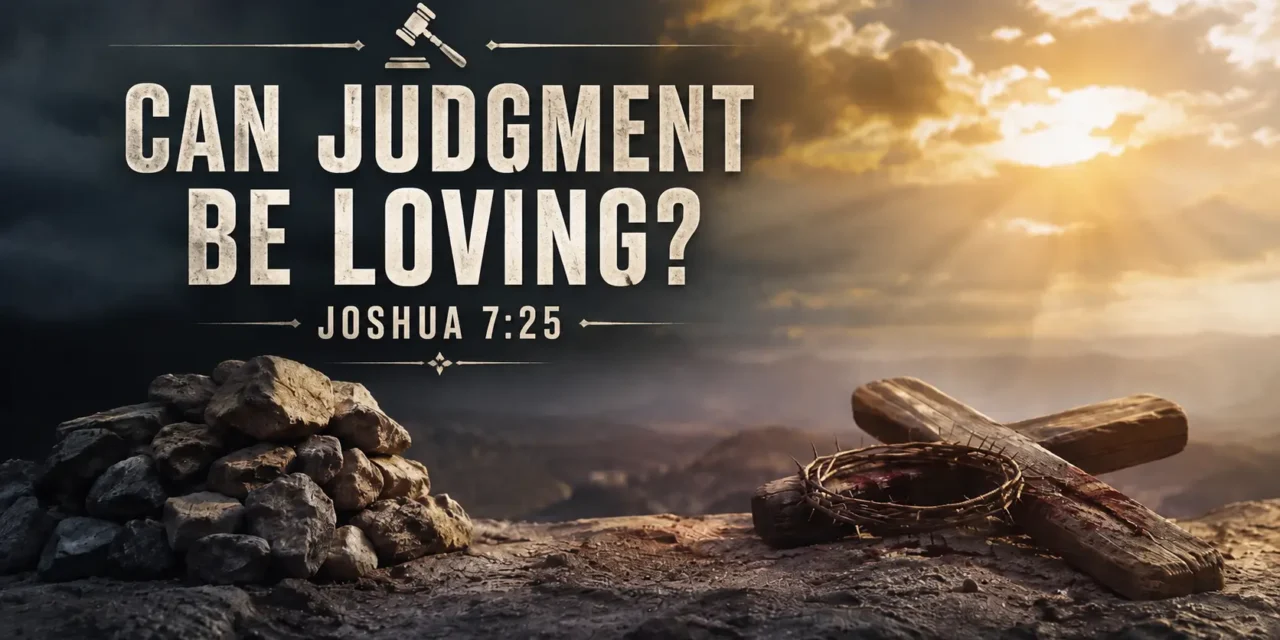
“Then Joshua said to Achan, ‘Why have you brought trouble on us? The LORD will now bring trouble on you.’ And all the Israelites stoned Achan and his family and burned their bodies.”
Joshua 7:25, NLT
Joshua 7 is not one of those passages people stitch onto throw pillows.
It is heavy. It is disturbing. And for many skeptics, it raises an honest question: How can God be loving if He commands judgment like this?
That question should not be brushed aside with a nervous smile and a quick “God works in mysterious ways.” Sometimes Christians answer difficult passages too quickly, like we are trying to get out of a theological parking ticket. But Joshua 7 deserves reverence, patience, and honesty.
Achan had taken what God had devoted to destruction. This was not merely theft. It was rebellion inside the covenant community. Israel had been warned. God’s people were not entering the land as private individuals doing whatever felt right. They were a holy people under the command of a holy God.
That still sounds severe to modern ears. It should. Judgment is supposed to sober us.
But the passage is not teaching that God is empty of love. It is teaching that God’s love is never separated from His holiness. A God who cannot judge evil cannot truly defend the good. A God who shrugs at rebellion is not merciful; He is morally indifferent.
And this is where Scripture forces us to slow down. We often want a loving God who never judges, but we also want a just God who confronts evil. We cannot have it both ways. If God is just, evil matters. Sin matters. Hidden sin matters. The damage we cause matters.
Joshua 7 is hard because it shows us that God does not treat sin like a small stain on the carpet. He treats it like spiritual poison in the camp.
But the story does not end in the Valley of Achor.
The Bible keeps moving until justice and mercy meet at the cross. Jesus Christ does not reveal a different God from the God of Joshua. He reveals the same holy God, now giving Himself for sinners. At Calvary, God does not pretend sin is harmless. He places judgment on His own Son, so guilty people can receive mercy without justice being denied.
That is the heart of the gospel.
The skeptic may still wrestle with Joshua 7. Honestly, believers should wrestle too. But Christianity does not answer the problem of judgment by saying sin is no big deal. It answers by pointing to Jesus, the One who stood in the place of sinners.
God is just.
And in Christ, He is also the justifier of the one who has faith in Jesus.
Pray This
Lord, help me not to explain away the hard parts of Your Word. Teach me to trust Your justice, tremble at sin, and see Your mercy most clearly in Jesus Christ. Give me humility when I have questions and faith when Your holiness feels heavier than I expected. Amen.










Recent Comments